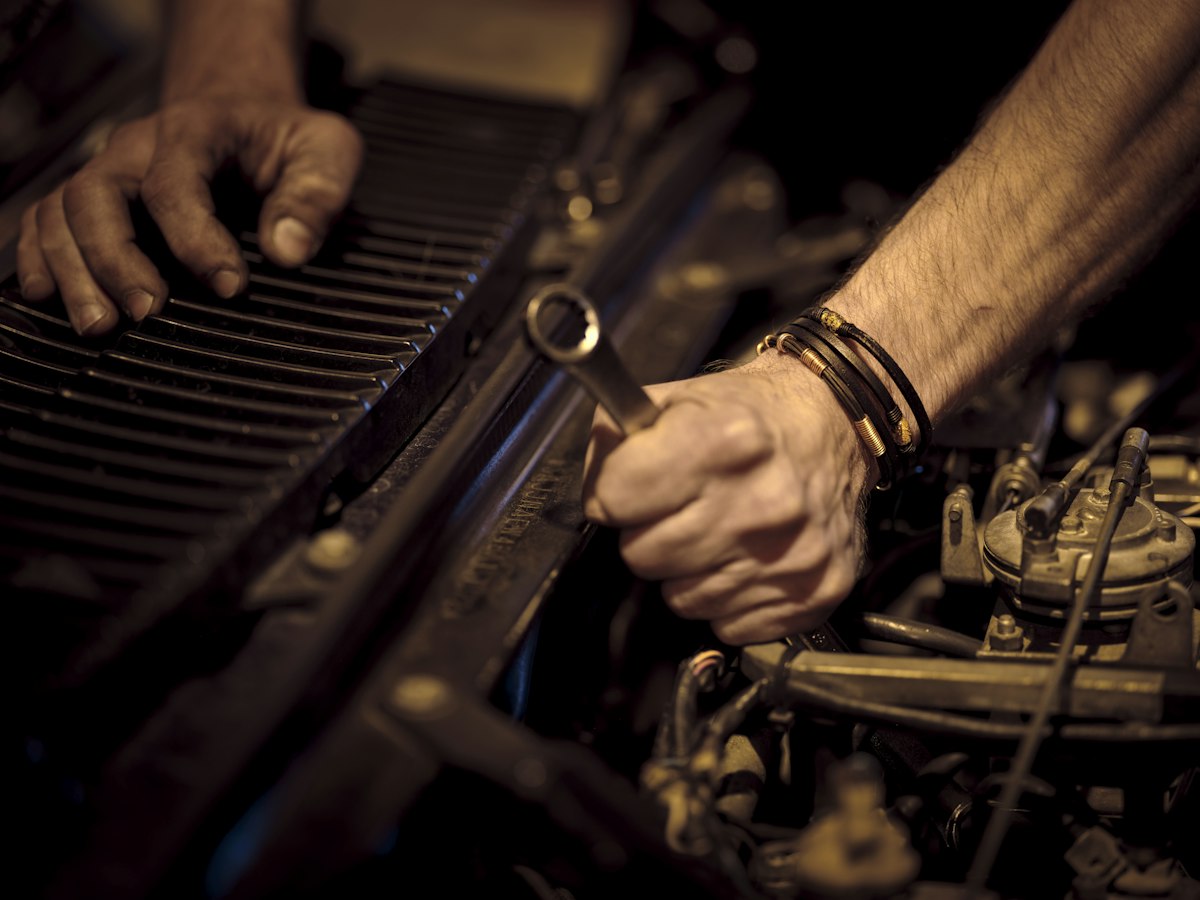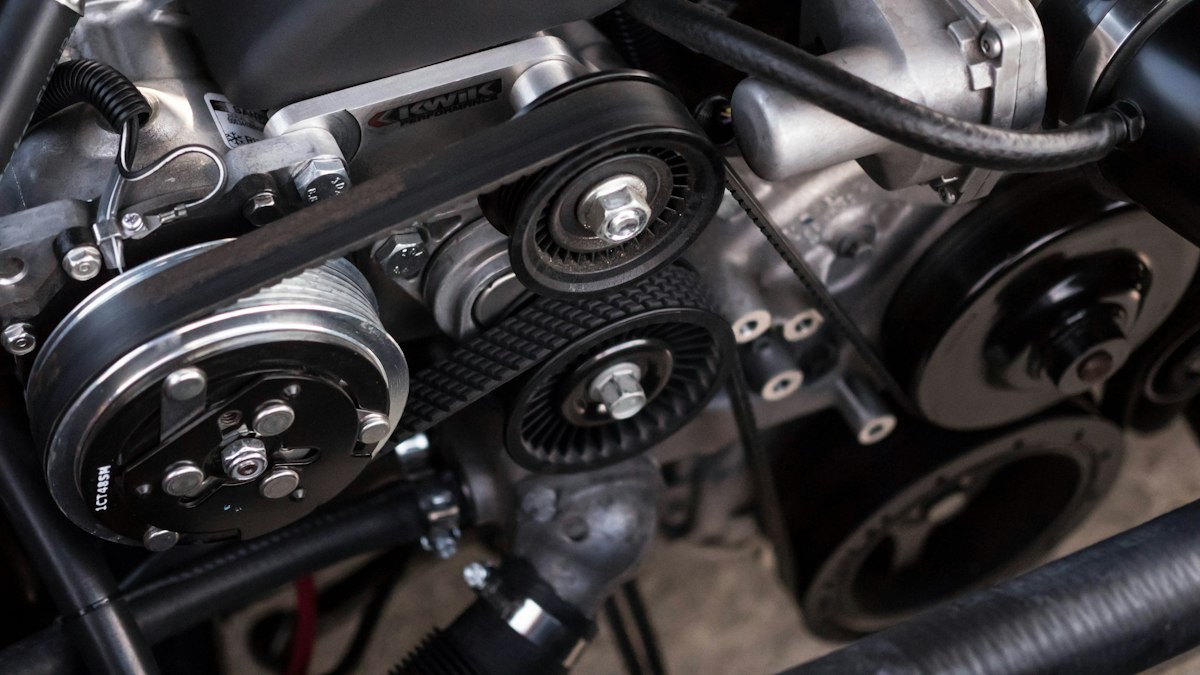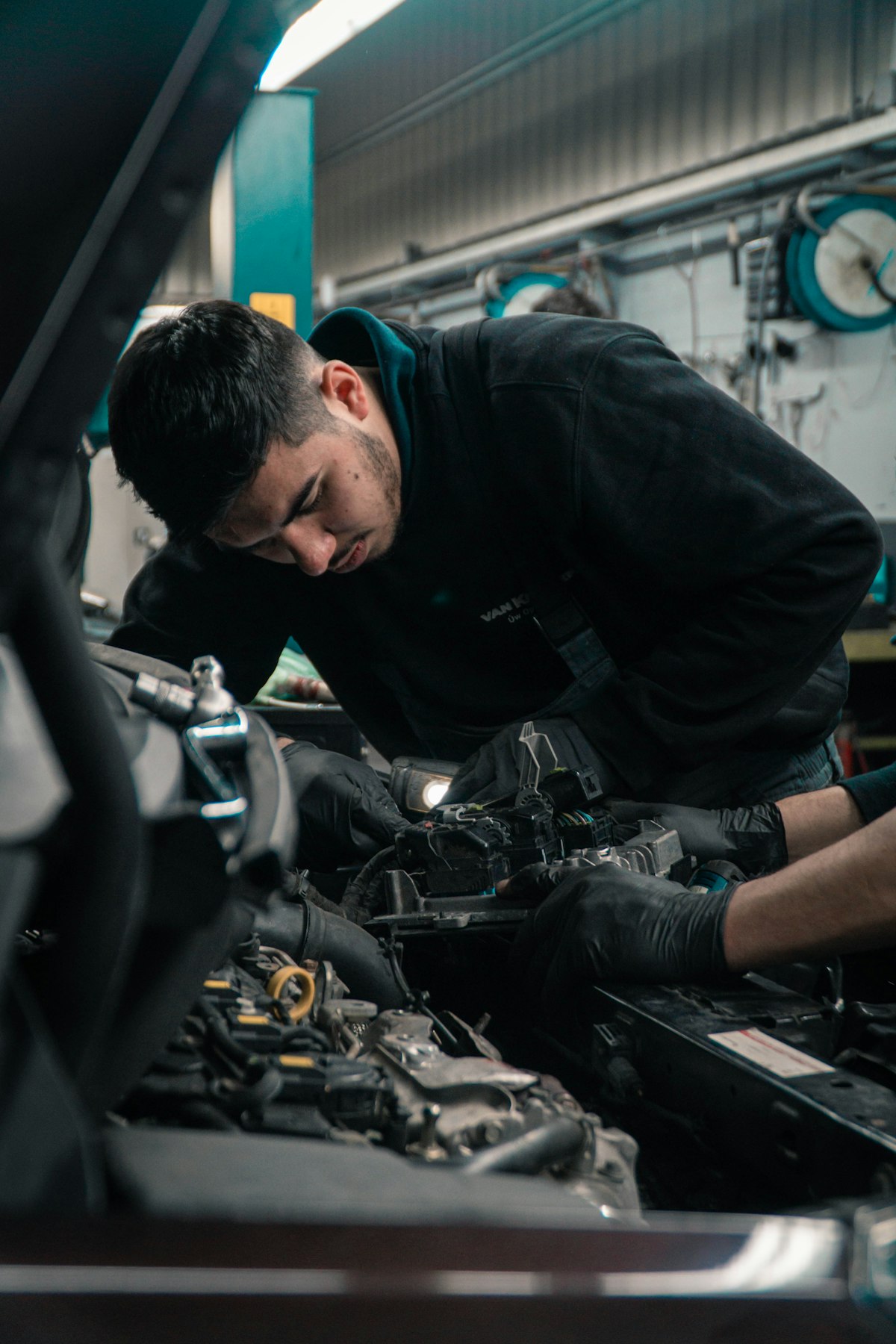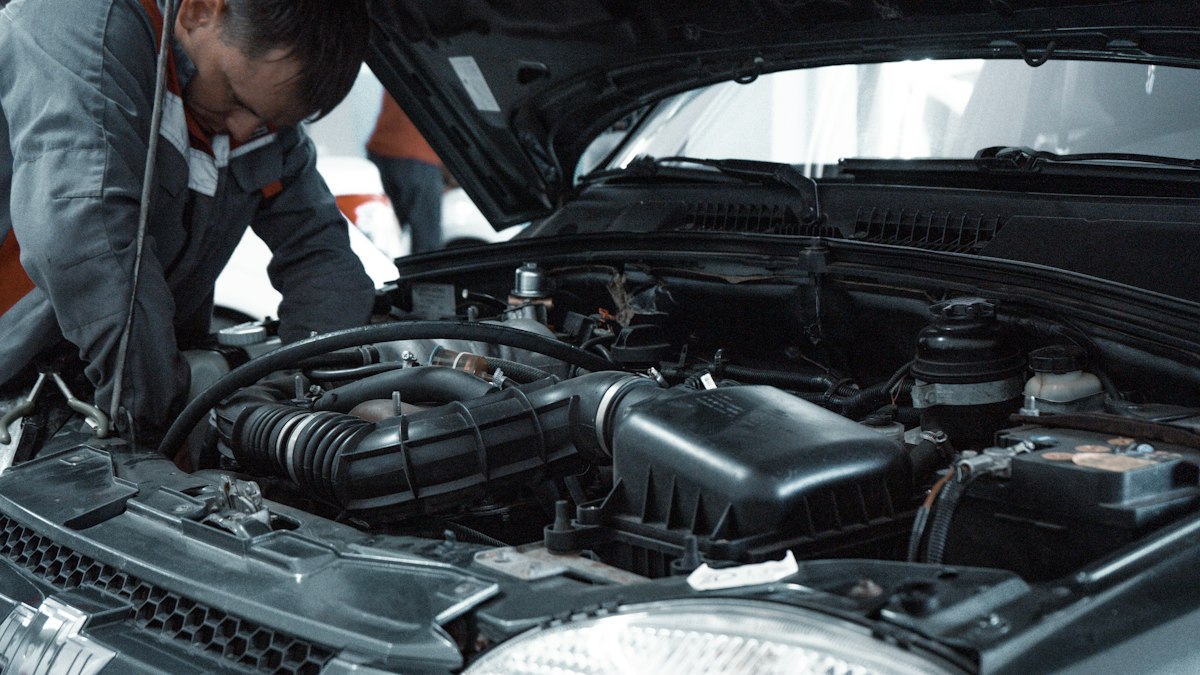
If you’re replacing your car battery every 2-3 years in the UAE and wondering why your cousin in Europe gets 5-6 years from the same brand, the answer is simple: heat kills batteries faster than cold ever could. I replace 4-5 batteries every week at our Industrial Area 2 workshop in Sharjah, and 80% of them are premature failures directly caused by our brutal summers. The battery manufacturers rate their products based on 25°C ambient temperature — we’re running 50°C on asphalt in July.
TL;DR
- Heat accelerates the chemical reactions inside batteries, causing faster internal degradation and fluid evaporation
- A battery rated for 5 years in Europe will typically last 2-3 years in UAE conditions
- Regular testing, parking in shade, and addressing parasitic drains can extend battery life by 30-40%
- Budget AED 280-450 for a quality replacement battery, not the AED 180 economy options that fail in 18 months
The Science: Why 50°C Summers Murder Batteries
Every car battery is essentially a controlled chemical reaction happening inside a plastic box. Lead plates sit in sulfuric acid, and the reaction between them creates electrical current. Here’s what most people don’t realize: for every 10°C increase above 25°C, the rate of chemical reaction inside a battery doubles. Under your hood in a Sharjah parking lot in August, your battery can easily reach 70-80°C.
At those temperatures, several destructive processes accelerate. The electrolyte fluid (that sulfuric acid solution) evaporates faster, even in “maintenance-free” sealed batteries. The lead plates corrode more quickly. The internal separators that keep positive and negative plates from touching start to warp and degrade. I’ve opened batteries that failed after 18 months and found the plates completely sulfated, the separators brittle, and the fluid level dropped by 40%.
The cruel irony is that hot batteries also work harder. Your AC compressor draws serious current in summer — I’ve measured 30-40 amps on some systems. Your cooling fans run constantly. Your ECU richens the fuel mixture. Everything electrical is working overtime precisely when the battery is at its weakest.
The Real Culprit: Heat + Short Trips = Dead Battery
The combination that kills batteries fastest in the UAE isn’t actually long highway drives in summer. It’s short urban trips where the battery never fully recharges. I see this constantly with customers who live 5 minutes from their office in Sharjah or do school runs around Al Nahda.
Here’s what happens: you start your car, which draws 200-300 amps from the battery for 2-3 seconds. Your alternator needs 20-30 minutes of driving to fully replace that charge. But you drive 8 minutes, park in the sun where the battery cooks at 75°C all day, then repeat. The battery never reaches full charge, sulfation builds up on the plates, and capacity drops month by month.
I tested a customer’s 18-month-old battery last week — a good Bosch S4 that should last 3 years minimum. His commute was 6 minutes each way. The battery was showing 390 CCA (cold cranking amps) when it should have been 540 CCA. It was effectively dead at half its expected lifespan, purely from chronic undercharging in extreme heat.
The desert dust and coastal humidity we get in Sharjah adds another layer. Fine dust settles on battery terminals and creates invisible current paths. I’ve measured parasitic drains of 150-200 milliamps caused purely by dirty battery terminals creating a conductive bridge. That’s enough to drain a weakened battery in 3-4 days of parking.
Battery Types: What Actually Works in UAE Heat
Not all batteries are equal when it comes to surviving Gulf summers. I’ve tracked failure rates across different technologies over my 9 years, and the data is clear:
| Battery Type | Average Life (UAE) | Typical Price (AED) | Heat Resistance |
|---|---|---|---|
| Standard flooded | 18-24 months | 180-280 | Poor |
| Calcium/Silver | 24-30 months | 280-380 | Good |
| Enhanced flooded (EFB) | 30-36 months | 350-450 | Better |
| AGM (Absorbent Glass Mat) | 36-48 months | 450-650 | Best |
The cheap batteries — usually unbranded or economy tier — use thinner lead plates and lower-grade separators. They fail fast. I’ve seen them sulfate completely in 14 months. The calcium or silver-enhanced batteries use better materials and handle heat better, but they’re still flooded designs with liquid electrolyte that evaporates.
EFB batteries were developed for start-stop systems and use thicker plates with better acid circulation. They genuinely last longer in heat. But AGM batteries are the real performers here. The electrolyte is absorbed in glass mat separators, so there’s nothing to evaporate. The plates are packed tighter, and the whole assembly handles vibration and heat better. Yes, they cost AED 450-650, but over 4 years that’s actually cheaper per month than replacing a AED 280 battery every 2 years.
The catch: your car needs to be compatible. AGM batteries require specific charging profiles. If your alternator is set up for standard flooded batteries and you install AGM, you can actually undercharge it and kill it early. I check the charging system before recommending AGM — takes 10 minutes with proper diagnostics.
Parasitic Drains: The Silent Battery Killer
Heat weakens batteries, but parasitic electrical drains finish them off. A healthy battery can handle 50-80 milliamps of standby draw (your radio presets, ECU memory, alarm system). But I regularly find cars drawing 200-500 milliamps when everything should be asleep.
Last month I diagnosed a 2019 Nissan Patrol that was killing batteries every 8 months. The customer had replaced three batteries in two years — always assuming it was the heat. I connected my Snap-on ammeter and measured 380 milliamps with everything off and doors closed. That’s enough to drain a good battery in 10-12 days of airport parking.
The culprit was the aftermarket stereo system installed by a previous owner. They’d wired the amplifier directly to battery positive, bypassing the ignition switch. The amp was drawing 180 milliamps continuously, and the subwoofer was adding another 120 milliamps. Combined with normal parasitic draw, the battery never stood a chance.
Common parasitic drain sources I find regularly:
- Aftermarket alarms wired incorrectly (100-200mA)
- Glove box or trunk lights staying on due to faulty switches (1500-2000mA — kills battery overnight)
- Failed alternator diodes allowing reverse current flow (200-400mA)
- Corroded fusebox terminals creating phantom circuits (varies)
- Aftermarket phone chargers that don’t switch off with ignition (50-100mA)
Finding parasitic drains requires methodical fuse-pulling and current measurement. I charge AED 99 for electrical diagnostics, and it typically takes 30-45 minutes to isolate the circuit. Much cheaper than replacing batteries every year.
How to Actually Extend Battery Life in UAE Heat
The single most effective thing you can do is park in shade. I know that sounds obvious, but the data is real. A battery sitting at 55°C under a shaded parkade will outlast one cooking at 75°C in direct sun by 40-50%. If you don’t have covered parking at home, get a reflective windshield cover — it genuinely reduces under-hood temperatures by 8-10°C.
Second: take longer drives occasionally. If your daily commute is short, make a point to drive 30-40 minutes on weekends. Highway speed is ideal because your alternator puts out maximum current (80-120 amps on most systems) and the airflow cools everything. This fully recharges the battery and reverses some of the sulfation that builds up during short trips.
Third: get your battery tested every 6 months. We do free battery testing at our workshop — takes 3 minutes with a proper load tester. The test measures CCA and gives you actual numbers. When a battery drops below 70% of its rated CCA, replace it. Don’t wait for it to fail when you’re parked at Dubai Airport for two weeks in August.
Fourth: keep terminals clean and tight. I use a wire brush and apply terminal protector spray (AED 15 from any auto parts shop). Loose or corroded terminals create resistance, which means your alternator works harder and charges less efficiently. I’ve seen 0.5-0.8 volts drop across dirty terminals — that’s huge.
Fifth: if you’re parking for extended periods (more than a week), consider a battery maintainer. These small trickle chargers (AED 120-180 for decent ones) keep the battery at optimal charge without overcharging. Particularly useful if you travel frequently for work or have a second car that sits unused.
When to Replace vs When to Charge
People often ask whether a dead battery needs replacement or just a charge. Here’s my diagnostic process:
If the battery is less than 2 years old and went flat due to leaving lights on or sitting unused, charge it fully and load test it. Use a proper smart charger (not a fast charger — those cook batteries). If it accepts charge and tests above 80% CCA, it’s probably fine.
If the battery is 2+ years old, fails slowly (cranks weak for days before dying), or shows physical damage (swollen case, leaking terminals), replace it. These are signs of internal degradation that charging won’t fix.
If you jump-start your car and it immediately dies when you remove the jumper cables, your alternator isn’t charging. That’s a separate issue — typically AED 450-800 to replace an alternator in most sedans, or AED 1,200-1,800 for German cars with complex electrical systems.
I keep a Bosch KTS diagnostic system that can read battery management system data on newer cars. BMWs, Mercedes, and some Audis from 2015+ have smart alternators that adjust charging based on battery condition, temperature, and electrical load. If you replace the battery without registering it in the system, the car continues using the old charging profile and can undercharge or overcharge the new battery. This registration process takes 5 minutes with proper scan tools but can’t be done without them.
Owner Checklist
- Test battery voltage and CCA every 6 months (free at most workshops including ours)
- Clean battery terminals and check cable tightness every 3 months
- Park in shade whenever possible to reduce under-hood temperatures
- Take a 30+ minute highway drive weekly if you mostly do short trips
- Check for parasitic drain if battery dies repeatedly (proper diagnosis costs AED 99)
- Replace battery when CCA drops below 70% of rating — don’t wait for complete failure
FAQ
Q: Can I just buy a more powerful battery to last longer in the heat?
A: Not really. Installing an 80Ah battery in a car designed for 60Ah won’t extend life — it’ll just take longer to charge and might never reach full charge on short trips. The chemical degradation from heat happens regardless of capacity. Better to buy the correct capacity in higher quality (calcium, EFB, or AGM) than oversizing with cheap technology. A proper calcium battery (AED 320-380) will outlast an oversized economy battery every time.
Q: Why does my battery die overnight but test fine at the workshop?
A: Classic parasitic drain scenario. The battery itself is healthy, but something is drawing current when parked. Load testing only checks the battery’s ability to deliver current, not what’s consuming it when idle. You need parasitic draw testing — I pull fuses one by one while measuring current to find the culprit circuit. Cost is AED 99 for diagnostics, then repair cost depends on what’s draining (could be as simple as a faulty door switch or as complex as a shorted module).
Q: Should I turn off all electronics before shutting down to save battery?
A: Modern cars handle this automatically — when you turn the key off, the ECU cuts power to non-essential systems. The old advice about turning off AC and radio before shutdown applied to cars from the 1990s. That said, if you have aftermarket equipment (stereos, dashcams, radar detectors) wired improperly, they might stay powered. If you’re unsure, have the electrical system checked. A proper installation should draw less than 80 milliamps with everything asleep.
If your battery is struggling or you’re replacing it yearly, bring it to our workshop for proper electrical diagnostics. We’ll test the battery, check alternator output, measure parasitic draw, and give you real numbers — not guesses. Call me, Ravi, at +971 52 987 8153 or book a free battery inspection at our Industrial Area 2 workshop in Sharjah. Better to spend AED 99 on diagnostics than AED 350 on unnecessary batteries.