Last month, a customer brought me a “perfect” 2018 Nissan Altima he’d just bought from a dealer in Dubai — paid AED 32,000, drove it 200 kilometers, and the transmission started slipping. When I dropped the pan, I found metal shavings and burnt fluid. Someone had reset the service light and polished it up nice, but that gearbox was already dying. A proper pre-purchase inspection would have cost him AED 250 and saved him the AED 7,500 he’s now spending on a transmission rebuild.
TL;DR
- Never skip a proper mechanical inspection — the AED 200-300 cost can save you AED 5,000-15,000 in hidden repairs
- UAE’s extreme heat and dust create specific problems: AC systems, radiators, and suspension bushings wear faster here than anywhere else
- Check the service history and bring the car to an independent workshop, not the seller’s “trusted mechanic”
The UAE Used Car Reality Check
I’ve inspected over 500 used cars for buyers in the past five years, and here’s what keeps me up at night: about 60% of them had serious issues the seller either didn’t mention or actively hid. This isn’t Pakistan or India where you can bargain down AED 10,000 on the spot — UAE sellers know their market, they detail their cars professionally, and they know exactly which problems to mask.
The heat here destroys cars differently than anywhere else I’ve worked. Plastic hoses get brittle, rubber bushings crack, AC compressors work overtime and fail early. A car that looks five years old might be ten, and one that’s done “only 80,000 km” might have actually done 180,000 with a rolled-back odometer. I’ve seen both.
Dubai and Sharjah used car dealers are professionals — some honest, many not. The individual sellers on Dubizzle range from genuine owners to curb-siders who flip cars weekly. Your job isn’t to trust anyone. Your job is to verify everything.
Point 1-4: The Visual Walk-Around (Before You Even Start the Engine)
1. Panel gaps and paint thickness
Walk around the car slowly. Do all the panels line up? Are the gaps between the hood and fenders even on both sides? If one side is 5mm and the other is 10mm, someone’s done bodywork there. I carry a small paint thickness gauge (costs about AED 180 on Amazon) — factory paint is usually 100-140 microns. Anything over 200 microns means repaint, anything over 400 microns means filler underneath.
Last week I checked a 2019 Honda Accord that looked pristine. Paint gauge showed 650 microns on the entire driver’s side. Seller claimed it was “just a minor parking scratch repair.” When I looked closer, the door frame had wrinkles — that car had been side-impacted hard and poorly repaired.
2. Tires and wear patterns
Check all four tires. Are they the same brand? Same age? The manufacture date is stamped on the sidewall (four digits: week and year). If the car has four different brands, the owner didn’t maintain it properly. If the front tires are worn on the inside edge only, the alignment’s been off for months — which means suspension components are probably worn too.
In our Sharjah heat, tires crack even when they have tread left. Any tire over five years old should be replaced regardless of depth. I’ve seen too many blowouts on Sheikh Mohammed Bin Zayed Road from old rubber.
3. Fluids check
Pull the oil dipstick. Oil should be amber or light brown, not black like tar. Wipe it on a white tissue — if you see sparkles, that’s metal particles. Engine’s wearing internally. Check the coolant reservoir — it should be bright green, orange, or pink depending on type. Brown or milky coolant means contamination, possibly a head gasket leak.
4. Under the car
Get down on your knees or use your phone camera to look underneath. Any oil spots on the pavement where it was parked? Any wet areas on the engine, transmission, or differential? A few drips might be acceptable on a 10-year-old car, but active leaks mean immediate repairs.
| Common Leak Repairs | Cost Range (AED) |
|---|---|
| Valve cover gasket | 450-800 |
| Oil pan gasket | 600-1,200 |
| Transmission pan seal | 350-600 |
| Rear main seal | 1,800-3,500 |
| Power steering hose | 400-700 |
Point 5-8: Engine and Mechanical Systems
5. Cold start test
This is critical — tell the seller NOT to warm up the car before you arrive. A cold start reveals problems a warm engine hides. When you turn the key, the engine should fire within 2-3 seconds and settle to a smooth idle. Blue smoke on startup means worn piston rings (expensive). White smoke means coolant in the cylinders (head gasket — very expensive). Black smoke means running too rich (usually fixable but indicates neglect).
Listen for any knocking, ticking, or rattling. A light ticking from the top end on a Toyota or Nissan is often just injectors — normal. A heavy knock from deep in the engine is rod bearings — catastrophic.
6. Transmission test drive
Take it on Sheikh Mohammed Bin Zayed Road or Emirates Road where you can safely accelerate hard. An automatic should shift smoothly without jerking, slipping, or hesitation. When you floor it, the car should downshift quickly and pull hard. Any delay, any flaring of the RPM between shifts, any shudder — walk away or negotiate down AED 5,000-8,000 for the transmission work coming.
Manual transmission: the clutch should engage smoothly about halfway up the pedal travel. If it engages right at the floor, the clutch is nearly gone (AED 1,500-2,500 to replace). Any grinding when shifting means synchros are worn.
7. AC performance (crucial in UAE)
Turn the AC to maximum cold and put your hand over the center vent. Within 2-3 minutes, it should blow ice cold — around 5-8°C. I actually carry a small thermometer. Anything above 12°C means the system isn’t working properly. Could be just a regas (AED 150-200), or it could be a failing compressor (AED 1,200-1,500).
In our 50°C Sharjah summers, a weak AC isn’t a luxury problem — it’s a safety problem. I’ve had customers nearly pass out driving from Dubai to Abu Dhabi with a struggling AC system.
8. Suspension and steering
Find some speed bumps (easy enough in any UAE neighborhood). Go over them at 20 km/h. Listen for clunks, rattles, or squeaks. The car should feel controlled and quiet. Any banging noise means worn bushings, ball joints, or shock absorbers.
Turn the steering wheel lock to lock while stationary. Any clicking or grinding means CV joint issues (AED 800-1,400 per side). On the highway, the car should track straight with no pulling to either side.
Point 9-11: Electronics and Interior
9. All the buttons and screens
I’m serious — press every single button. Test every window, both mirrors, the sunroof, seat adjusters, heated seats if equipped. Check that the infotainment screen responds, Bluetooth connects, USB ports work. I’ve seen buyers take delivery then discover the rear windows don’t work, the navigation is dead, or the parking sensors are unplugged.
10. Warning lights
Turn the ignition to ON without starting the engine. All the warning lights should illuminate, then go out after starting except for the seatbelt light. If the check engine light doesn’t come on at all during this test, someone might have removed the bulb to hide a problem. Bring an OBD2 scanner (I use a AED 250 Bluetooth one) and check for stored fault codes.
11. AC vents and cabin filter
Turn on the AC and smell the vents. Musty or moldy smell means the evaporator is dirty or the cabin filter is ancient (AED 80-150 to replace). In Dubai and Sharjah’s dusty environment, I recommend changing cabin filters every 10,000 km, not the 20,000 km the manual says.
Point 12: Service History and Documentation
This is where most buyers fail. They trust the seller’s word. Don’t.
Ask for service records — actual invoices from workshops, not a stamped book that could be faked in Sharjah Industrial Area for AED 50. Real service invoices show what was actually done and when. I want to see oil changes every 5,000-10,000 km, brake fluid every two years, coolant every three years.
Check the Mulkiya (registration card) carefully. How many previous owners? One owner for five years is good. Five owners in three years is a red flag — that car has problems people keep discovering and dumping.
Pull a Dubai Police or RTA accident history report. Some cars advertised as “accident-free” have been in three unreported fender-benders. If the seller refuses to let you do this check, walk away immediately.
Get the VIN and run it through one of the online history services. Not perfect, but it catches some odometer fraud and major accident history.
What a Professional Inspection Costs (And Why It’s Worth It)
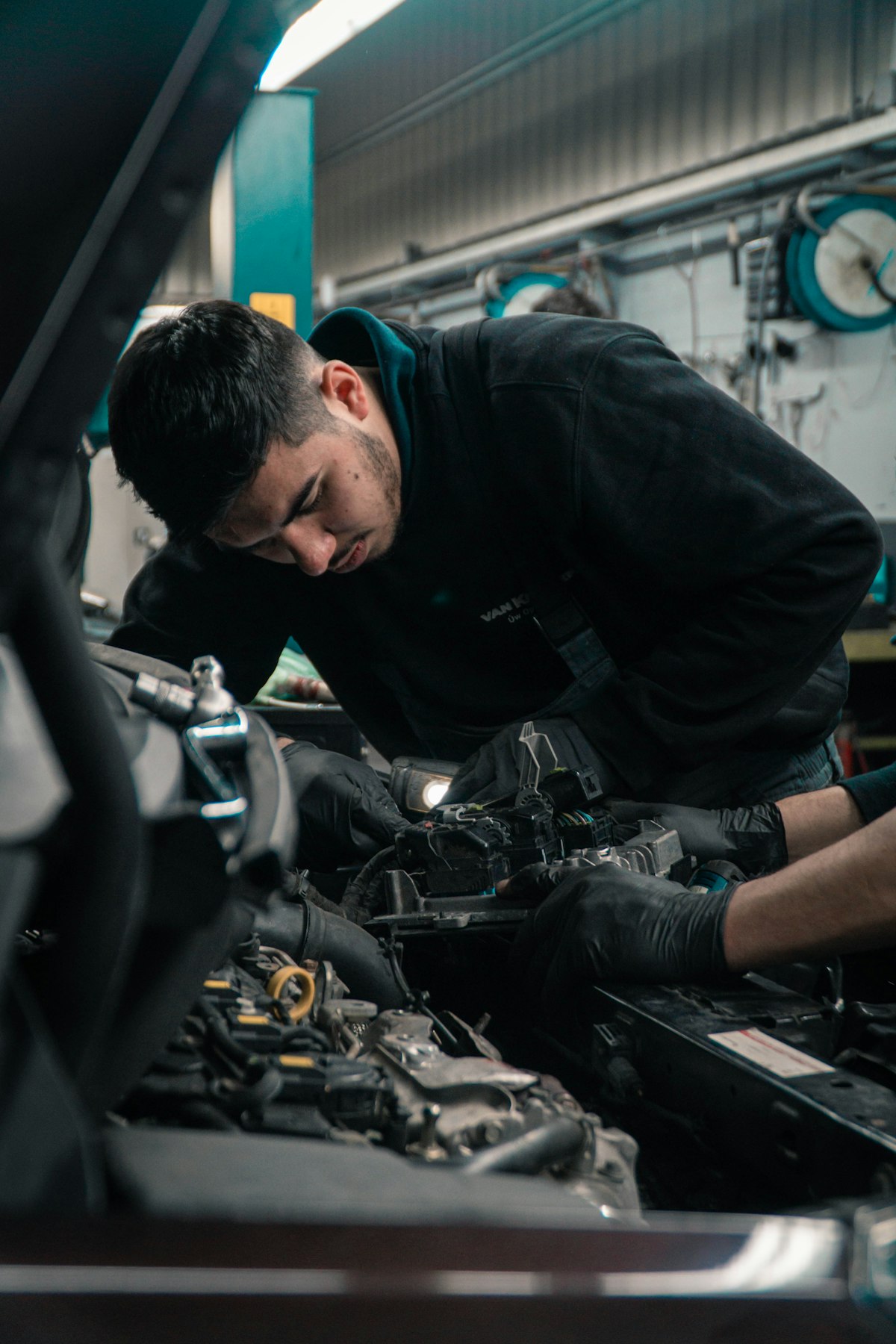
At Al Manara, we charge AED 250 for a comprehensive pre-purchase inspection. That includes:
- Full visual inspection of body, paint, glass, lights
- Under-car inspection on the lift
- Engine compression test or leak-down test
- Transmission fluid condition and test drive
- Brake measurement (pad and rotor thickness)
- Suspension and steering component check
- AC temperature and pressure test
- Full OBD2 diagnostic scan
- Written report with photos of any issues found
The big dealer workshops in Dubai charge AED 400-600 for the same thing. Either way, it’s worth every dirham. I’ve found problems that saved buyers from AED 12,000 engine rebuilds, AED 15,000 in hidden accident damage repairs, and countless AED 3,000-5,000 issues.
One customer ignored my advice last year, skipped the inspection to save AED 300, and bought a 2017 Chevrolet Tahoe that looked perfect. Three weeks later it overheated on Al Dhaid Road. Cracked cylinder head from a previous overheat that someone had temporarily sealed with stop-leak. Repair cost him AED 9,500.
The Negotiation Tool
Even if you’re still buying the car, a professional inspection report is your negotiation weapon. When I find AED 4,000 worth of needed repairs, you can negotiate that amount off the price — or make the seller fix it before sale. Sellers who refuse to allow an inspection are hiding something. Every time.
I’ve seen buyers save anywhere from AED 2,000 to AED 20,000 off the asking price after getting my inspection report. The seller can’t argue when you show them photos of worn brake rotors, leaking seals, or failing suspension components.
Owner Checklist
- Verify service history with actual invoices, not just a stamped book
- Run VIN check for accident history and odometer verification
- Test drive when engine is completely cold, not pre-warmed
- Check AC temperature with a thermometer (should be under 10°C)
- Get professional pre-purchase inspection at independent workshop (AED 250-400)
- Test every electronic feature, button, and screen before signing
- Inspect tire age (manufacture date) — replace if over 5 years old
- Look underneath for leaks, damage, or rust
- Scan for OBD2 fault codes with proper scanner
- Verify all panel gaps and paint thickness for hidden accident damage
- Test drive on highway to check transmission shifting and engine power
- Calculate total cost of needed repairs found and negotiate price down
FAQ
Q: Should I trust a dealership certification or get my own inspection?
A: Get your own inspection always. I’ve seen “certified pre-owned” cars from major dealers with worn brake pads at 2mm (dangerous — should be replaced at 3mm), old tires with cracks, and skipped services. Their certification covers legal minimums and liability, not your actual interests. An independent inspection at Al Manara or any good Sharjah or Dubai workshop costs AED 250-400 and gives you the real condition. Dealers won’t mind if they’re honest — and if they refuse, that tells you everything.
Q: What’s a reasonable amount of issues to accept on a used car?
A: Depends on age and price. A 3-year-old car under AED 40,000 should need basically nothing except maybe tires or brake pads. A 10-year-old car under AED 20,000 will probably need AED 2,000-4,000 in maintenance — that’s acceptable if you negotiate the price down accordingly. Walk away from any car needing engine or transmission work unless you’re getting it very cheap and know the repair costs. What I never accept: accident damage that wasn’t disclosed, oil leaks, engine noise, or transmission slipping. Those are deal-breakers or massive price reductions.
Q: Can I do this inspection myself or do I really need a mechanic?
A: You can do about 40% of it yourself if you’re handy — the visual checks, fluid levels, test drive feel. But you can’t check compression, can’t properly evaluate transmission condition, can’t read fault codes without a good scanner, and most importantly, you don’t have 12 years of experience knowing what normal sounds like versus what’s about to fail. I’ve had engineers and pilots bring me cars because they know their limits. AED 250 for professional inspection is cheaper than one missed problem. Come to our Industrial Area 2 workshop — I’ll show you what I’m checking and teach you things you can do yourself next time.
If you’re looking at a used car anywhere in Sharjah, Dubai, or Ajman, bring it to us before you sign anything. I’d rather spend 45 minutes finding problems than get a call two weeks later asking me to fix what you didn’t know you were buying. Call me, Ahmad, at +971 52 987 8153 or bring the car to Al Manara Auto Repair in Industrial Area 2, Sharjah. The inspection might save you enough to buy a whole other car.