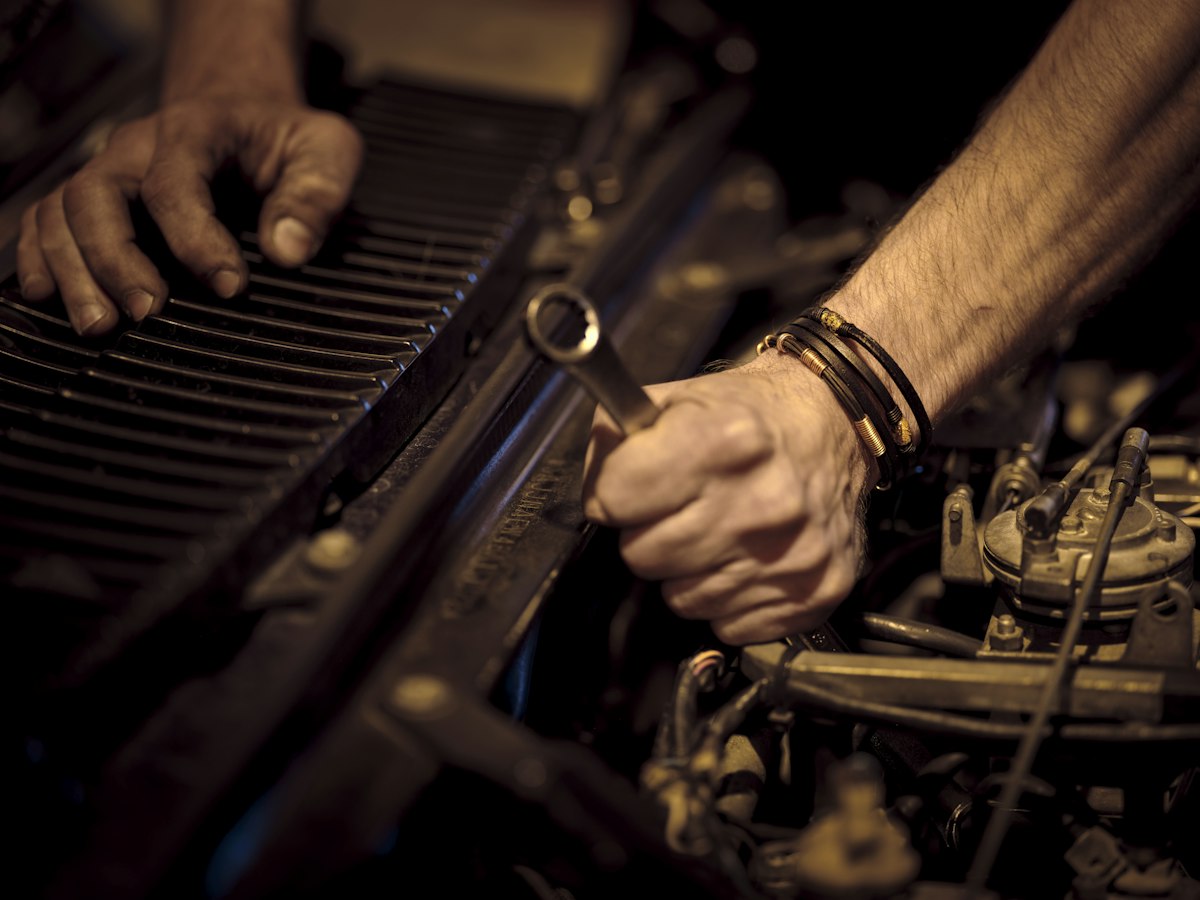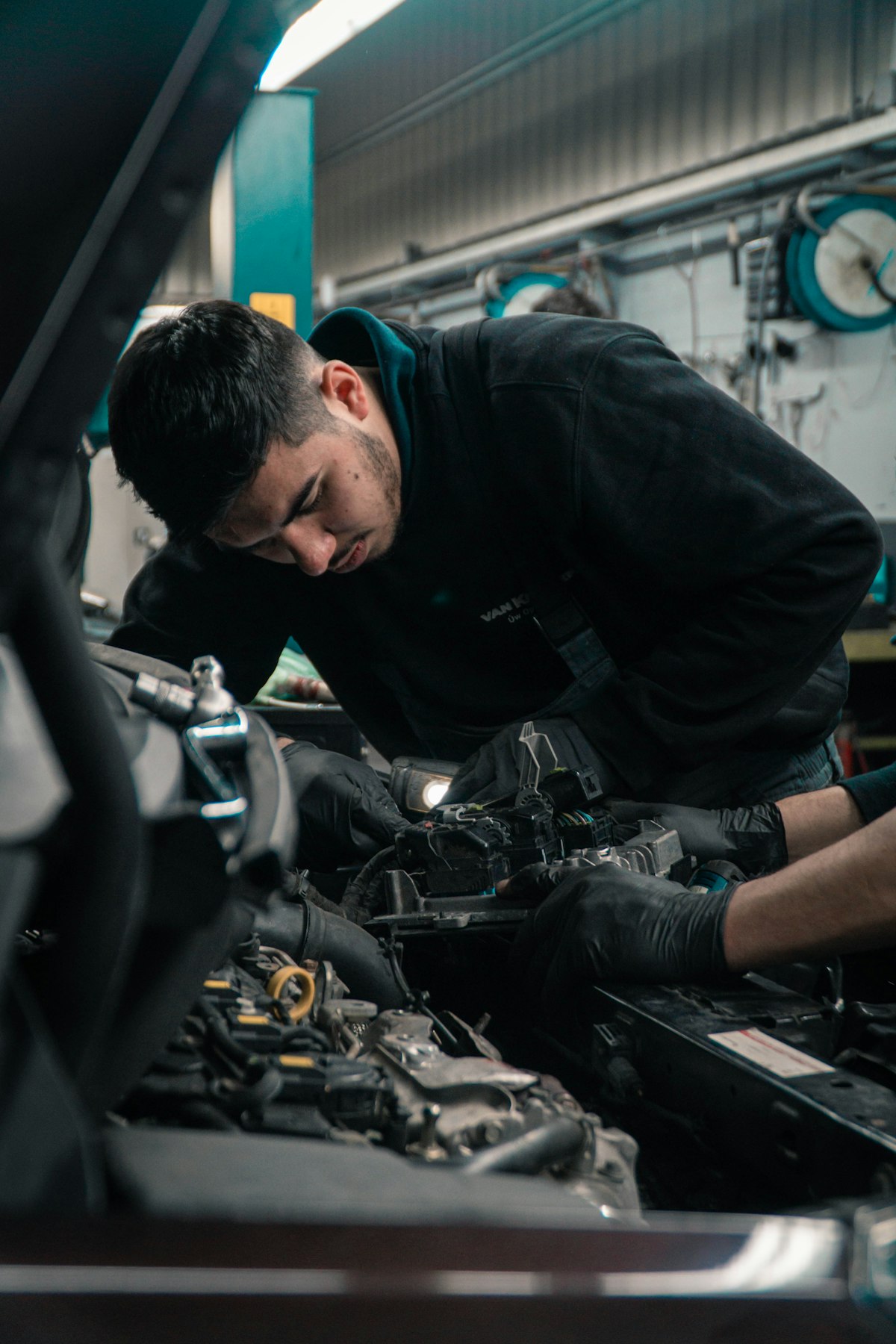
Your engine is talking to you — and most of the time, it’s trying to tell you something’s wrong before it becomes expensive. After twelve years listening to engines in Sharjah’s Industrial Area 2 workshops, I can diagnose half the problems just by sound before I even pop the hood. Some noises mean “get this checked soon,” while others mean “shut it down right now before you destroy your engine.”
TL;DR
- Knocking sounds usually indicate serious internal engine damage or bad fuel — expect AED 8,000-15,000 for rebuild if ignored
- High-pitched squealing from belts costs AED 150-300 to fix but leads to AED 1,500-2,000 damage if the belt snaps
- Ticking that gets louder with RPM often means valve train issues — catch it early for AED 800-1,200, wait too long and you’re looking at AED 3,500-5,000
- Grinding noises are never “just a sound” — they always mean metal-on-metal contact somewhere
- Most engine sounds are urgent in Sharjah’s 50°C heat because problems escalate three times faster than temperate climates
1. The Rod Knock: Deep Metallic Knocking That Changes With RPM
This is the sound that makes every mechanic wince. A deep, rhythmic knocking that speeds up when you accelerate — it means your connecting rod bearings are worn out and the rod is literally hammering against the crankshaft. I heard this exact sound last month on a 2015 Nissan Altima that came in from Al Nahda. The owner thought it was “just a small noise” for three weeks.
By the time he brought it to our workshop, the bearing had completely disintegrated and the rod had scored the crankshaft journal. What could have been an AED 2,500 bearing replacement turned into an AED 12,000 complete engine rebuild. The crankshaft needed grinding, new pistons, the works.
What causes it: Usually severe oil starvation. Either the owner missed too many oil changes, the oil pump failed, or there was a leak nobody noticed. In Sharjah’s heat, oil breaks down 40% faster than the manufacturer expects, which is why I always recommend 5,000 km intervals instead of the 10,000 km some manuals suggest.
How urgent: Shut the engine off immediately. Every minute you run it causes exponentially more damage. Get it towed. I’m not being dramatic — I’ve seen rod knock turn into a hole through the engine block when someone “just drove it to the shop.”
2. Valve Train Ticking: Rapid Tapping From the Top of the Engine
This sounds like someone rapidly tapping a pencil on a desk, coming from under the valve cover. It’s usually most noticeable when you first start the car, and on some engines it gets quieter as things warm up. But if it’s getting louder or staying constant, you’ve got a problem.
I work on a lot of older Camrys and Accords here in Industrial Area 2, and valve train noise is probably the most common sound I diagnose. Usually it’s either valve lash (clearance) that needs adjustment, or hydraulic lifters that are worn out. On Toyota’s 2AZ-FE engine — the one in millions of Camrys — this is almost predictable around 150,000 km if you’ve been using cheap oil.
The fix and cost:
| Repair Type | Japanese Cars | German Cars | Korean Cars |
|---|---|---|---|
| Valve adjustment | AED 350-500 | AED 600-800 | AED 400-550 |
| Lifter replacement | AED 1,200-1,800 | AED 2,500-3,500 | AED 1,400-2,000 |
| Full timing + valves | AED 3,500-5,000 | AED 6,000-8,500 | AED 4,000-5,500 |
How urgent: Medium. You can drive for a few weeks, but get it diagnosed within the month. The danger is that a sticking valve can eventually break, and then you’re looking at bent valves, damaged pistons, and possibly a destroyed head. That jumps from AED 1,500 to AED 8,000 real fast.
3. Serpentine Belt Squeal: High-Pitched Screaming on Startup
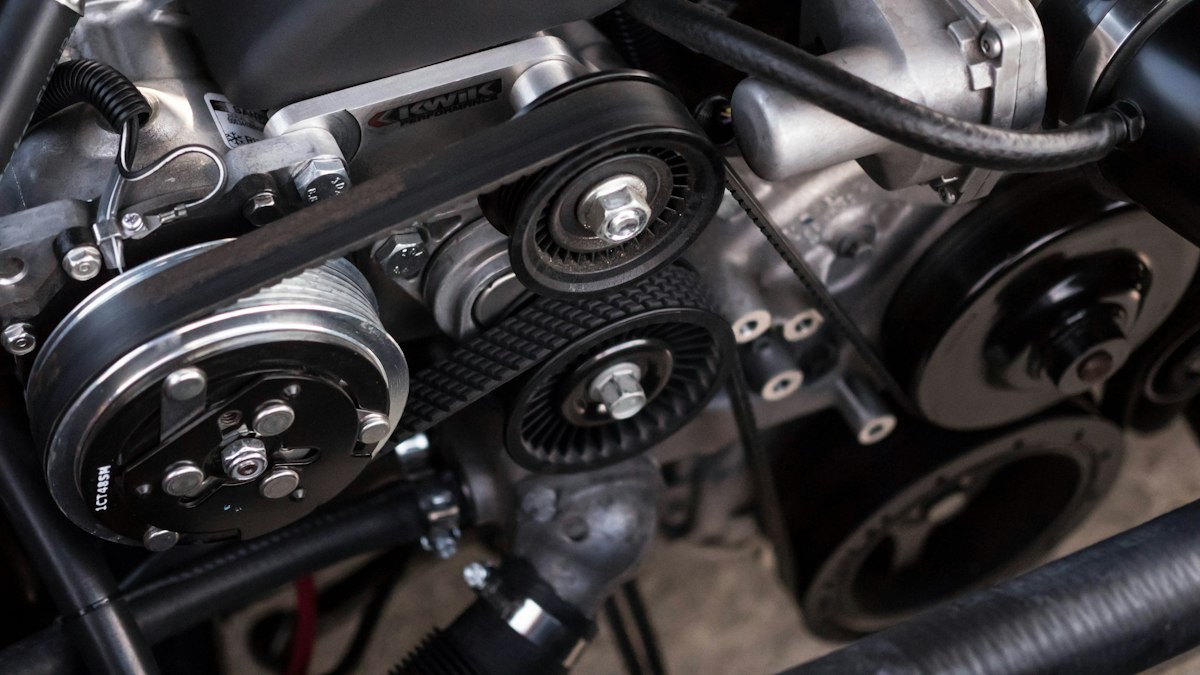
That ear-piercing screech when you start your car in the morning? That’s your serpentine belt slipping on the pulleys. I hear this constantly in Sharjah, especially during summer when temperatures hit 50°C and rubber deteriorates fast. The fine desert dust that gets everywhere doesn’t help either — it acts like sandpaper on the belt surfaces.
Most people ignore this because it often goes away after a few seconds once the belt warms up and gains traction. But here’s what they don’t realize: that belt drives your alternator, power steering pump, water pump, and AC compressor. When it finally snaps — and it will — all of those stop working simultaneously.
I had a customer last summer driving a 2017 Hyundai Tucson who ignored the squeal for two months. The belt snapped on Emirates Road during afternoon traffic. The engine immediately overheated because the water pump stopped, and he cracked the cylinder head. A AED 200 belt replacement became AED 4,500 for head work plus the towing and inconvenience.
What causes the squeal:
- Worn belt (most common after 60,000 km)
- Misaligned pulley
- Failing belt tensioner
- Oil contamination on the belt surface
The fix: New belt costs AED 150-300 depending on your vehicle. If the tensioner is weak, add another AED 200-400. Total job takes 30-45 minutes. Do this and you’ll avoid the AED 1,500-2,000 in consequential damage.
4. Piston Slap: Hollow Knocking When Cold
This is a hollow, knocking sound when you first start a cold engine that usually disappears within a minute as things warm up and expand. It sounds different from rod knock — less metallic, more of a “tok tok tok” rhythm. I hear this a lot on higher-mileage GM and some Nissan engines.
Piston slap happens when the pistons have worn slightly and there’s too much clearance between the piston and cylinder wall. When the engine is cold, that gap is at its maximum, and the piston rocks back and forth as it changes direction, making that knocking sound.
Here’s the honest truth: mild piston slap on a high-mileage engine isn’t necessarily a death sentence. I’ve seen engines run for another 50,000 km with it. But you need to know what you’re dealing with because severe piston slap can indicate bore wear that will eventually require a rebuild.
What to do: Get a compression test (AED 150-200) and a leak-down test (AED 200-250) to see how bad the wear actually is. If compression is still good and oil consumption is normal, you can probably live with it. If you’re burning a liter of oil every 1,000 km, you’re looking at rebuild territory: AED 8,000-12,000.
How urgent: Low to medium. Monitor it. If it starts happening when the engine is warm, or if it gets noticeably louder, move this up to urgent.
5. Turbo Whine or Grinding: High-Pitched Whirring Sound
Modern turbocharged engines — and we see a lot of them here on German cars and the newer Japanese models — have a distinctive sound when the turbo is failing. A healthy turbo makes a subtle whoosh under acceleration. A dying turbo makes a high-pitched whine like a jet engine spooling up, or worse, a grinding sound like metal on metal.
I rebuilt a turbo on a 2016 Audi Q5 last month that came in with exactly this symptom. The owner noticed the whine but kept driving because the car still had power. By the time he brought it in, the compressor wheel had contacted the housing and metal shavings had gone through the intake system. What should have been a AED 3,500 turbo replacement became AED 5,800 because we had to clean the entire intake and replace the intercooler.
Common causes:
- Oil starvation to the turbo bearings (failed oil feed line)
- Contaminated oil from missed changes
- Failed turbo seals allowing shaft play
- Boost leaks causing the turbo to overwork
Costs in Sharjah:
| Repair | Independent Shop | Dealer |
|---|---|---|
| Turbo rebuild | AED 2,500-3,500 | AED 4,500-6,000 |
| New turbo (aftermarket) | AED 3,500-5,000 | N/A |
| New turbo (OEM) | AED 5,000-7,500 | AED 8,000-12,000 |
| Diagnostic & inspection | AED 150-250 | AED 350-450 |
How urgent: Very high. A disintegrating turbo can send metal debris into your engine. Pull over, shut it down, get it towed.
6. Timing Chain Rattle: Metallic Rattling on Cold Start
This is a loose, rattling sound from deep inside the engine, typically lasting 2-5 seconds on cold startup before the oil pressure builds. It’s especially common on certain German engines (looking at you, BMW N20 and N47) and some Nissan VQ engines. The timing chain has stretched, or the tensioner has weakened, allowing slack in the chain.
Timing chain failure is one of the most expensive non-crash repairs you can face. I just finished a timing chain job on a 2014 BMW 328i — the owner brought it in after hearing the rattle for “just a week.” The chain had jumped two teeth, bending four valves when the piston hit them. Total damage: AED 9,500.
If you hear this rattle, don’t wait for “a better time” to get it fixed. That better time never comes, and the repair only gets more expensive. A timing chain replacement runs AED 3,500-5,500 depending on the engine. A complete engine rebuild after the chain snaps runs AED 12,000-18,000.
How urgent: High. Get it inspected within a week. Don’t take long road trips. If the rattle gets louder or longer, stop driving immediately.
7. Exhaust Leak Ticking: Rhythmic Ticking That Follows Engine Speed
This sounds like valve train ticking but it comes from below the engine, not above. It’s a rhythmic tick-tick-tick that perfectly matches your RPM. What you’re hearing is exhaust gas escaping through a crack or failed gasket, and it’s loudest during acceleration.
The most common spot is the exhaust manifold gasket, especially on engines with steel manifolds that expand and contract in Sharjah’s temperature swings — 50°C during the day, down to 25°C at night. That constant thermal cycling cracks gaskets and even the manifolds themselves.
I see this constantly on older Nissan Patrols and Toyota Land Cruisers. The repair isn’t terrible — AED 400-800 for manifold gaskets, AED 1,200-2,000 if the manifold itself is cracked and needs welding or replacement.
Why you shouldn’t ignore it: Besides the annoying sound, exhaust leaks before the catalytic converter throw off your oxygen sensor readings, causing rough running and poor fuel economy. I’ve seen 20% drops in fuel economy from a manifold leak. At today’s petrol prices, you’re wasting AED 200-300 per month.
How urgent: Medium. It won’t destroy your engine, but it’ll cost you money in wasted fuel and it might cause you to fail your registration emissions test.
8. Rod Bearing Knock vs. Piston Slap: How to Tell the Difference
Since I mentioned both earlier, here’s how to tell them apart when you hear a knocking sound:
Rod knock characteristics:
- Deep, metallic knocking
- Gets MUCH louder with RPM
- Doesn’t go away when warm
- Sounds like it’s from the bottom of the engine
- Changes noticeably when you load the engine (accelerate)
Piston slap characteristics:
- Hollow knocking
- Loudest when cold, often disappears when warm
- Doesn’t change much with load
- Rhythm matches engine speed but intensity stays the same
Here’s the test I use: Start the engine cold and listen. If the knocking goes away in 30-60 seconds, probably piston slap. If it stays or gets worse, probably rod knock. Then take the car for a short drive — if the knocking returns and gets louder under load, definitely rod knock. Stop immediately.
9. Water Pump Bearing Whine or Growl
A failing water pump bearing makes a whining or growling sound that increases with RPM. It sounds like it’s coming from behind the timing cover, which is exactly where the water pump lives on most engines. Sometimes you can feel roughness or play if you try to wiggle the pump pulley by hand.
In Sharjah’s heat, water pumps work overtime. Your cooling system is under constant stress at 50°C ambient, and a water pump that might last 150,000 km in Europe often fails at 100,000 km here. The bearings run in coolant, and if your coolant is old or contaminated, they wear faster.
The danger with water pump failure isn’t just overheating — though that’s bad enough. On interference engines (most modern engines), the water pump is often driven by the timing belt. When the pump seizes, it can snap the belt, causing the catastrophic valve-piston collision I mentioned earlier.
Costs:
- Water pump replacement (Japanese): AED 600-1,000
- Water pump replacement (German): AED 1,200-1,800
- Water pump + timing belt service: AED 1,800-3,500
- Engine damage from overheating: AED 3,500-12,000+
How urgent: High. You might have a few days, but don’t push it. Overheating happens fast in our climate.
10. Detonation or “Spark Knock”: Pinging Under Acceleration
This is a light pinging or rattling sound under hard acceleration, especially going uphill or in high gear at low RPM. It sounds like marbles rattling in a can. This is pre-ignition or detonation — the fuel is igniting too early or multiple flame fronts are colliding in the cylinder.
Modern engines have knock sensors that detect this and retard the timing to prevent damage, but if you’re hearing it consistently, something is wrong. Common causes:
- Bad fuel — This is common in the UAE if you accidentally pump 91 in a car that requires 95 or 98
- Carbon buildup — Direct-injection engines (most modern cars) build up carbon on the intake valves, creating hot spots
- Failing knock sensor — The engine can’t detect and compensate for knock
- Overheating — Hot spots in the combustion chamber
I diagnosed this last week on a 2018 Mazda CX-5. The owner had been using 91 octane to save money on a car that specified 95. The knock sensors were compensating, but the engine was running hot and down on power. A few tanks of proper fuel and a carbon cleaning service (AED 450-650) solved it.
Why it’s dangerous: Detonation creates extreme cylinder pressures and temperatures that can crack pistons, damage rings, and blow head gaskets. If you ignore it long enough, you’re looking at AED 6,000-15,000 in repairs.
How urgent: Medium to high. Switch to higher octane fuel immediately and get it diagnosed. If the knocking continues with proper fuel, stop driving and get it towed.
Owner Checklist
- Record any unusual sounds on your phone — it helps mechanics diagnose remotely and prevents miscommunication
- Note when the sound occurs: cold start only, hot engine, acceleration, deceleration, idle
- Check your oil level immediately if you hear knocking — many catastrophic failures start with low oil
- Don’t dismiss sounds that